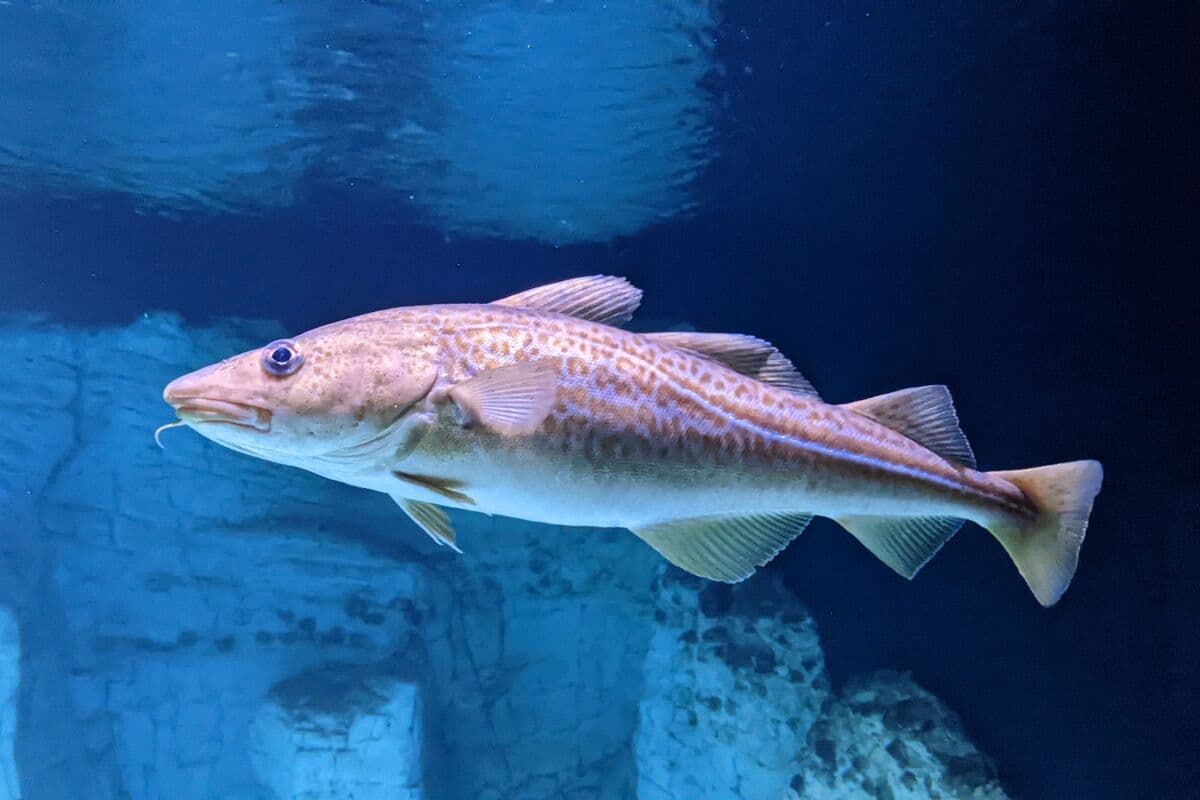
Photo: Wilhelm Thomas Fiege, Wikimedia Commons (CC BY-SA 4.0)
Gadus morhua
Surf beaches, rough ground, deep wrecks and reefs. Codling inshore in winter; bigger fish over deep structure.
Bottom fishing with lugworm, squid or crab; pirks and large soft plastics over wrecks.
No fish looms larger in British sea-angling folklore than the cod. Olive-brown to sandy in colour with a pale lateral line, a distinctive chin barbel and a cavernous mouth, cod are built for hoovering food off the seabed - crabs, worms, shellfish and any smaller fish unlucky enough to be in the way.
Winter is the classic season: from October the first "codling" arrive on storm-stirred beaches, and shore anglers brave gales for them through to March. Afloat, deep wrecks and rough ground hold bigger fish, with northern marks like Whitby famous for summer cod on the wrecks as well.
Lugworm and squid cocktails do the damage from the shore; pirks, shads and big soft plastics score from the boat. Cod fight with dogged head-shakes rather than blistering runs, but a double-figure fish through heavy surf is a proper achievement - and eats as well as anything in the sea.
The UK boat record stands around 58 lb - a fish most anglers can only dream about.
26 trips are currently targeting cod.